Buy infodisplay.eu ?
We are moving the project
infodisplay.eu .
Are you interested in purchasing the domain
infodisplay.eu ?
domain@kv-gmbh.de · 0541-91531010
Buy infodisplay.eu ?
What is the correct conjugation?
The correct conjugation of a verb depends on the subject of the sentence and the tense being used. In English, regular verbs typically follow a pattern of adding -ed to form the past tense (e.g., walk becomes walked). Irregular verbs, on the other hand, have unique conjugations that do not follow a set pattern (e.g., go becomes went). It is important to pay attention to the subject of the sentence and the tense being used in order to correctly conjugate a verb. **
What conjugation does "dare" have?
"Dare" is a regular verb in Italian and belongs to the second conjugation. In the present tense, it is conjugated as follows: io do, tu dai, lui/lei dà, noi diamo, voi date, loro danno. **


Similar search terms for Conjugation
Top-Angebote
Products related to Conjugation:
-
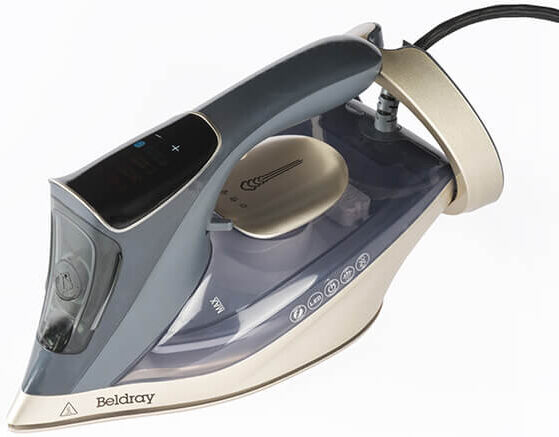
Beldray Digital LED Touchscreen Steam IronTake the guesswork out of ironing with the Beldray Digital LED Touchscreen Steam Iron. Designed for precision and ease of use, this advanced steam iron combines powerful performance with intuitive digital controls, helping you achieve smooth, crease‑free results across a wide range of fabrics. Powered by an impressive 3200W, the iron heats quickly and delivers consistent steam through a smooth ceramic soleplate that glides effortlessly over garments. The digital LED touchscreen features four preset fabric heat modes, allowing you to select the correct temperature with confidence and reduce the risk of scorching delicate items. For added reassurance, the iron includes an auto shut‑off function along with self‑clean, anti‑calc and anti‑drip features to support long‑lasting performance and protect clothing from water marks. A generous 380ml water tank, filled easily using the included measuring cup, allows longer ironing sessions with fewer refills. Finished with a 3‑metre power cord for extended reach, this steam iron offers flexibility, control and modern convenience. Supplied with a manufacturer’s 1‑year guarantee. Power: 3200W. Water Tank Capacity: 380ml. Cord Length: 3m. Dimensions: 30(L) x 15.2(W) x 13(H) cm.34,99 £*Shipping: 3,50 £Secure redirect to the provider
-
Total Chef Electric Air Fryer Oven 5 Qt/4.8L W/ Digital Touchscreen ControlsPerfect for everyone from busy families to college students, this versatile appliance uses rapid hot air circulation technology to cook quick and easy meals using little or no oil.99,98 $*Shipping: 0,00 $Secure redirect to the provider
-
Everyday Crate Large Display Digital Wall Clock With Alarm, Temperature & Calendar Display Large Display Digital Wall Clock With Alarm, Temperature & Calendar DisplayExperience effortless timekeeping with a sleek clock designed to keep your day organized at a glance. This digital wall clock combines a clean minimalist design with a large, easytoread screen, making it perfect for busy homes, offices, bedrooms,...54,97 $*Shipping: 0,00 $Secure redirect to the provider



-
What is conjugation in German?
Conjugation in German refers to the process of changing the form of a verb to match the subject of the sentence. This means that the verb will have different endings depending on whether the subject is "I," "you," "he/she/it," "we," or "they." Conjugation is an important aspect of German grammar as it helps to indicate who is performing the action in a sentence. It is essential for learners of German to understand how to conjugate verbs in order to communicate effectively in the language. **
-
How do I distinguish between the verbs of the E-conjugation and the consonant conjugation?
In Old Norse, the E-conjugation verbs typically end in -a in the infinitive form, while the consonant conjugation verbs end in -a, -i, or -u. Additionally, the E-conjugation verbs have a stem vowel that changes between the present and past tense, while the consonant conjugation verbs have a stem vowel that remains the same. It is also important to note that there are irregular verbs in both conjugations that do not follow these patterns. Therefore, it is important to study and memorize the specific conjugation patterns for each verb. **
-
What is the conjugation in German?
Conjugation in German refers to changing the form of a verb to match the subject of a sentence. This means adjusting the verb's ending based on the person (I, you, he/she/it, we, you all, they) and tense (present, past, future). German verbs can have different conjugations depending on these factors, making it important to learn the various verb forms to communicate accurately in the language. **
-
What does the consonantal conjugation mean?
Consonantal conjugation is a grammatical feature found in Semitic languages, where the root of a verb consists of consonants only, and the vowels are added to indicate different tenses, moods, and aspects. This type of conjugation is characterized by changes in the vowels within the root consonants to convey different meanings. Consonantal conjugation allows for a high degree of flexibility and complexity in verb forms, making it a key feature of Semitic language grammar. **


Is there a language without conjugation?
Yes, there are languages without conjugation. For example, Chinese is a language that does not have verb conjugation. In Chinese, verbs remain the same regardless of the subject or tense. Instead, time expressions or context are used to indicate when an action took place. **
What is the correct conjugation of s'asseoir?
The correct conjugation of "s'asseoir" in the present tense is as follows: - Je m'assois - Tu t'assois - Il/elle/on s'assoit - Nous nous asseyons - Vous vous asseyez - Ils/elles s'assoient **
Top-Angebote
Products related to Conjugation:
-
MegaChef Immersion Circulation Precision Sous-Vide Cooker With Digital Touchscreen DisplayThe sous-vide immersion circulator cooker brings professional cooking techniques to your home. It offers complete control over the cooking process,unmatched by other cooking techniques.89,49 $*Shipping: 0,00 $Secure redirect to the provider
-
Inspirex Interactive Touchscreen Automatic ToasterWith the Inspirex Touchscreen Toaster, perfection is at your fingertips. Toast your favorite type of bread, bagel, English muffin, or pastry, perfectly crispy on the outside while keeping the inside moist and delicious.99,99 $*Shipping: 0,00 $Secure redirect to the provider
-
Beldray Digital LED Touchscreen Steam IronTake the guesswork out of ironing with the Beldray Digital LED Touchscreen Steam Iron. Designed for precision and ease of use, this advanced steam iron combines powerful performance with intuitive digital controls, helping you achieve smooth, crease‑free results across a wide range of fabrics. Powered by an impressive 3200W, the iron heats quickly and delivers consistent steam through a smooth ceramic soleplate that glides effortlessly over garments. The digital LED touchscreen features four preset fabric heat modes, allowing you to select the correct temperature with confidence and reduce the risk of scorching delicate items. For added reassurance, the iron includes an auto shut‑off function along with self‑clean, anti‑calc and anti‑drip features to support long‑lasting performance and protect clothing from water marks. A generous 380ml water tank, filled easily using the included measuring cup, allows longer ironing sessions with fewer refills. Finished with a 3‑metre power cord for extended reach, this steam iron offers flexibility, control and modern convenience. Supplied with a manufacturer’s 1‑year guarantee. Power: 3200W. Water Tank Capacity: 380ml. Cord Length: 3m. Dimensions: 30(L) x 15.2(W) x 13(H) cm.34,99 £*Shipping: 3,50 £Secure redirect to the provider
-
Total Chef Electric Air Fryer Oven 5 Qt/4.8L W/ Digital Touchscreen ControlsPerfect for everyone from busy families to college students, this versatile appliance uses rapid hot air circulation technology to cook quick and easy meals using little or no oil.99,98 $*Shipping: 0,00 $Secure redirect to the provider
-
What is the correct conjugation?
The correct conjugation of a verb depends on the subject of the sentence and the tense being used. In English, regular verbs typically follow a pattern of adding -ed to form the past tense (e.g., walk becomes walked). Irregular verbs, on the other hand, have unique conjugations that do not follow a set pattern (e.g., go becomes went). It is important to pay attention to the subject of the sentence and the tense being used in order to correctly conjugate a verb. **
-
What conjugation does "dare" have?
"Dare" is a regular verb in Italian and belongs to the second conjugation. In the present tense, it is conjugated as follows: io do, tu dai, lui/lei dà, noi diamo, voi date, loro danno. **
-
What is conjugation in German?
Conjugation in German refers to the process of changing the form of a verb to match the subject of the sentence. This means that the verb will have different endings depending on whether the subject is "I," "you," "he/she/it," "we," or "they." Conjugation is an important aspect of German grammar as it helps to indicate who is performing the action in a sentence. It is essential for learners of German to understand how to conjugate verbs in order to communicate effectively in the language. **
-
How do I distinguish between the verbs of the E-conjugation and the consonant conjugation?
In Old Norse, the E-conjugation verbs typically end in -a in the infinitive form, while the consonant conjugation verbs end in -a, -i, or -u. Additionally, the E-conjugation verbs have a stem vowel that changes between the present and past tense, while the consonant conjugation verbs have a stem vowel that remains the same. It is also important to note that there are irregular verbs in both conjugations that do not follow these patterns. Therefore, it is important to study and memorize the specific conjugation patterns for each verb. **
Similar search terms for Conjugation
-
Everyday Crate Large Display Digital Wall Clock With Alarm, Temperature & Calendar Display Large Display Digital Wall Clock With Alarm, Temperature & Calendar DisplayExperience effortless timekeeping with a sleek clock designed to keep your day organized at a glance. This digital wall clock combines a clean minimalist design with a large, easytoread screen, making it perfect for busy homes, offices, bedrooms,...54,97 $*Shipping: 0,00 $Secure redirect to the provider
-
Uplift Treasures Car LCD Digital Clock With Seconds Display Car LCD Digital Clock With Seconds DisplayProduct Description: Keep track of time while on the road with this compact car digital clock. Featuring a clear LCD screen with seconds display and simple onebutton operation, it provides convenient time viewing without taking up valuable dashboard...46,97 $*Shipping: 0,00 $Secure redirect to the provider
-
Universal Stock Men's Dual Display Sports Watch With Luminous Digital Display And Alarm Men's Dual Display Sports Watch With Luminous Digital Display And AlarmStay on schedule while keeping your everyday style bold and practical. This 1 pc of men's sports watch combines analog and digital time displays, giving you quick access to essential information at a glance. Its luminous display improves visibility...99,97 $*Shipping: 0,00 $Secure redirect to the provider
-
What is the conjugation in German?
Conjugation in German refers to changing the form of a verb to match the subject of a sentence. This means adjusting the verb's ending based on the person (I, you, he/she/it, we, you all, they) and tense (present, past, future). German verbs can have different conjugations depending on these factors, making it important to learn the various verb forms to communicate accurately in the language. **
-
What does the consonantal conjugation mean?
Consonantal conjugation is a grammatical feature found in Semitic languages, where the root of a verb consists of consonants only, and the vowels are added to indicate different tenses, moods, and aspects. This type of conjugation is characterized by changes in the vowels within the root consonants to convey different meanings. Consonantal conjugation allows for a high degree of flexibility and complexity in verb forms, making it a key feature of Semitic language grammar. **
-
Is there a language without conjugation?
Yes, there are languages without conjugation. For example, Chinese is a language that does not have verb conjugation. In Chinese, verbs remain the same regardless of the subject or tense. Instead, time expressions or context are used to indicate when an action took place. **
-
What is the correct conjugation of s'asseoir?
The correct conjugation of "s'asseoir" in the present tense is as follows: - Je m'assois - Tu t'assois - Il/elle/on s'assoit - Nous nous asseyons - Vous vous asseyez - Ils/elles s'assoient **
* All prices are inclusive of VAT and, if applicable, plus shipping costs. The offer information is based on the details provided by the respective shop and is updated through automated processes. Real-time updates do not occur, so deviations can occur in individual cases. ** Note: Parts of this content were created by AI.